

Many homeowners ask the experts with Innovative Construction Solutions, “What’s the best way to fix poor yard drainage?” This is a common issue that can lead to a variety of problems, from flooded flower beds to water damage in your basement. The following are some of the ways to tackle poor yard drainage and keep your yard looking beautiful and dry all year round.
Assessing the Problem
The first step in fixing poor yard drainage is figuring out exactly where the problem lies. Poor drainage can occur for many reasons, such as the natural slope of your yard, compacted soil, or blocked gutters. Start by walking around your yard after a rain and looking for low spots where water tends to pool. Take note of any areas that stay wet longer than others. These are likely the places that need attention.
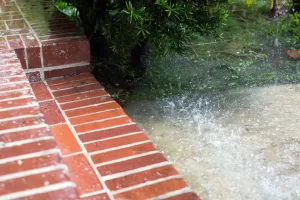
Next, consider the overall grading of your yard. Water should naturally flow away from your house, but if your yard has a negative slope that directs water toward your foundation, you’ll need to address this. Compact soil, which doesn’t allow water to pass through easily, can also contribute to poor drainage. In some cases, simply adding more soil or adjusting the grading can make a significant difference.
Install French Drains
Once you’ve assessed the situation, it’s time to consider solutions. One of the most effective ways to fix poor drainage is by installing a French drain. A French drain is essentially a trench filled with gravel that directs water away from problem areas. The drain works by allowing water to flow into a perforated pipe, which is buried in the gravel and carries the water to a more suitable location, such as a storm drain or a dry well.
To install a French drain, you’ll need to dig a trench at the lowest point of your yard where water tends to pool. The trench should be at least 18 inches deep and sloped slightly to encourage water flow. Once the trench is dug, line it with landscaping fabric to prevent dirt from clogging the gravel. Add a layer of gravel, then place the perforated pipe on top and cover it with more gravel.
Finally, cover the trench with soil and sod, and your French drain will be ready to work its magic.
Your best bet will be to contact Innovative Construction Solutions so we can handle all of this for you.
Create a Swale
If your yard has a significant slope, a swale might be an ideal solution. A swale is a shallow, ditch-like depression in the ground that directs water flow away from your house or other areas that are prone to flooding. Swales are typically designed with a gentle slope to guide water toward a designated drainage area, such as a storm drain or rain garden.
Creating a swale involves excavating a long, shallow trench along the natural water flow path. You’ll want the swale to be wide enough to carry water away efficiently, but not so deep that it disrupts your landscaping. Once the swale is dug, you can line it with rocks or plant grass to prevent erosion. In some cases, you may also want to add a retaining wall to keep the swale in place and prevent soil from washing away.
Again, Innovative Construction Solutions professionals can take care of this job so you don’t have to deal with all of the hassles involved.
Our experts not only know what’s the best way to fix poor yard drainage, we can tackle just about any kind project. Put us to the test by using our online contact form or calling Innovative Construction Solutions at (239) 384-5890.